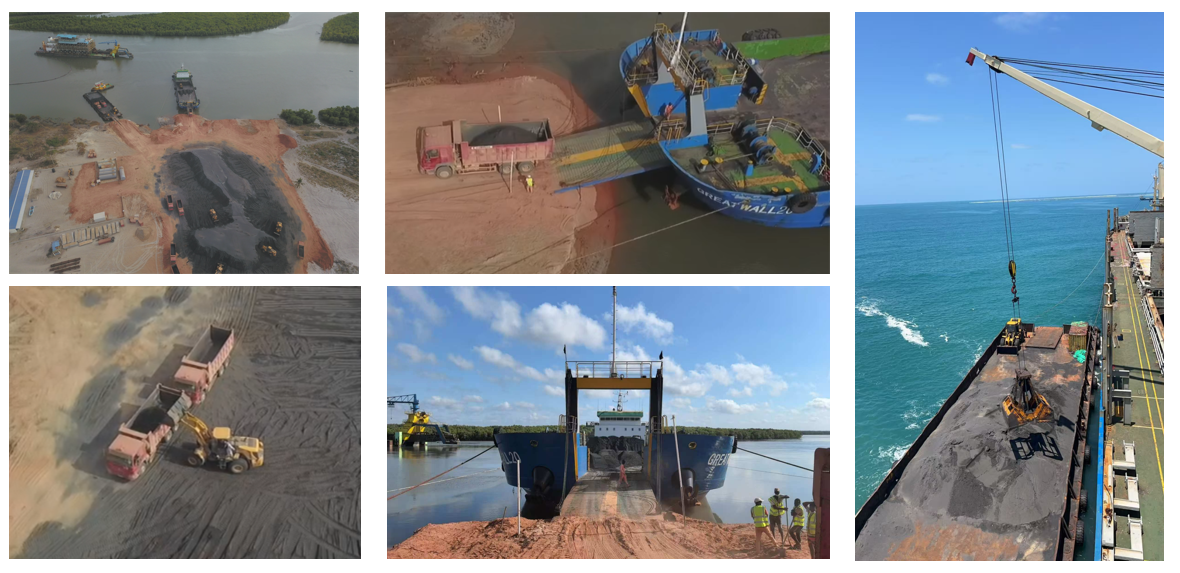
Monazite is an important rare earth phosphate mineral with the chemical formula (Ce,La,Nd,Th)PO₄. It is rich in light rare earth elements (such as cerium, lanthanum, neodymium) and thorium, and is one of the important ores for extracting rare earth elements and thorium.
1. Chemical Composition:* Primarily contains rare earth elements (Ce, La, Nd, etc.) and thorium (Th), with thorium content ranging from 0.1% to 20%. It is radioactive.
* May contain trace amounts of impurities such as uranium, calcium, and silicon.
2. Physical Properties:* Color: Yellowish-brown, reddish-brown, brownish-red; a few are green or colorless.
* Luster: Vitreous to resinous.
* Hardness: 5~5.5 (Mohs hardness).
* Density: 4.6~5.7 g/cm³ (varies depending on thorium content).
* Cleavage: Imperfect; fracture is conchoidal.
3. Radioactivity:* Due to the presence of thorium and trace amounts of uranium, it is weakly radioactive and requires careful handling.
Formation and Origin1. Geological Origin:
* Commonly found in granite, pegmatite, carbonate rocks, and placer deposits.
* Due to its high chemical stability, it easily accumulates after weathering, forming alluvial placer deposits (such as coastal placer deposits).
2. Major Originating Areas:
* China: Coastal placer deposits in Inner Mongolia, Jiangxi, Guangdong, Hainan, etc.
* Global: Australia (world's largest reserves), Brazil, India, South Africa, Malaysia, etc.
Industrial Applications1. Rare Earth Sources:
Monazite is the main ore of light rare earth elements (cerium group), used to extract cerium, lanthanum, neodymium, etc., and applied in permanent magnets, catalysts, glass polishing powders, etc.
2. Thorium Resources:
Thorium can be used as nuclear fuel (thorium-based molten salt reactors), but its use is currently limited, and radioactive waste requires strict management.
3. Other Uses:
Early used to manufacture gas lamp covers (containing thorium), but now phased out due to radioactivity.
Mining and Production Site
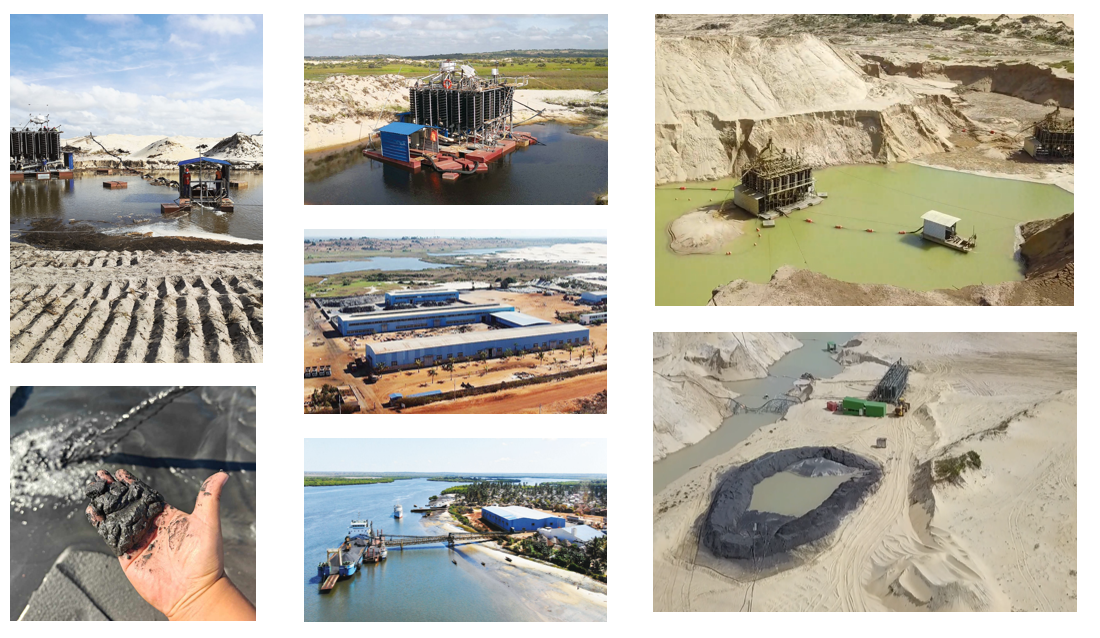
Mineral terminal loading site